General Pest Control
The quarterly exterior program that keeps the perimeter barrier maintained year-round.
Learn more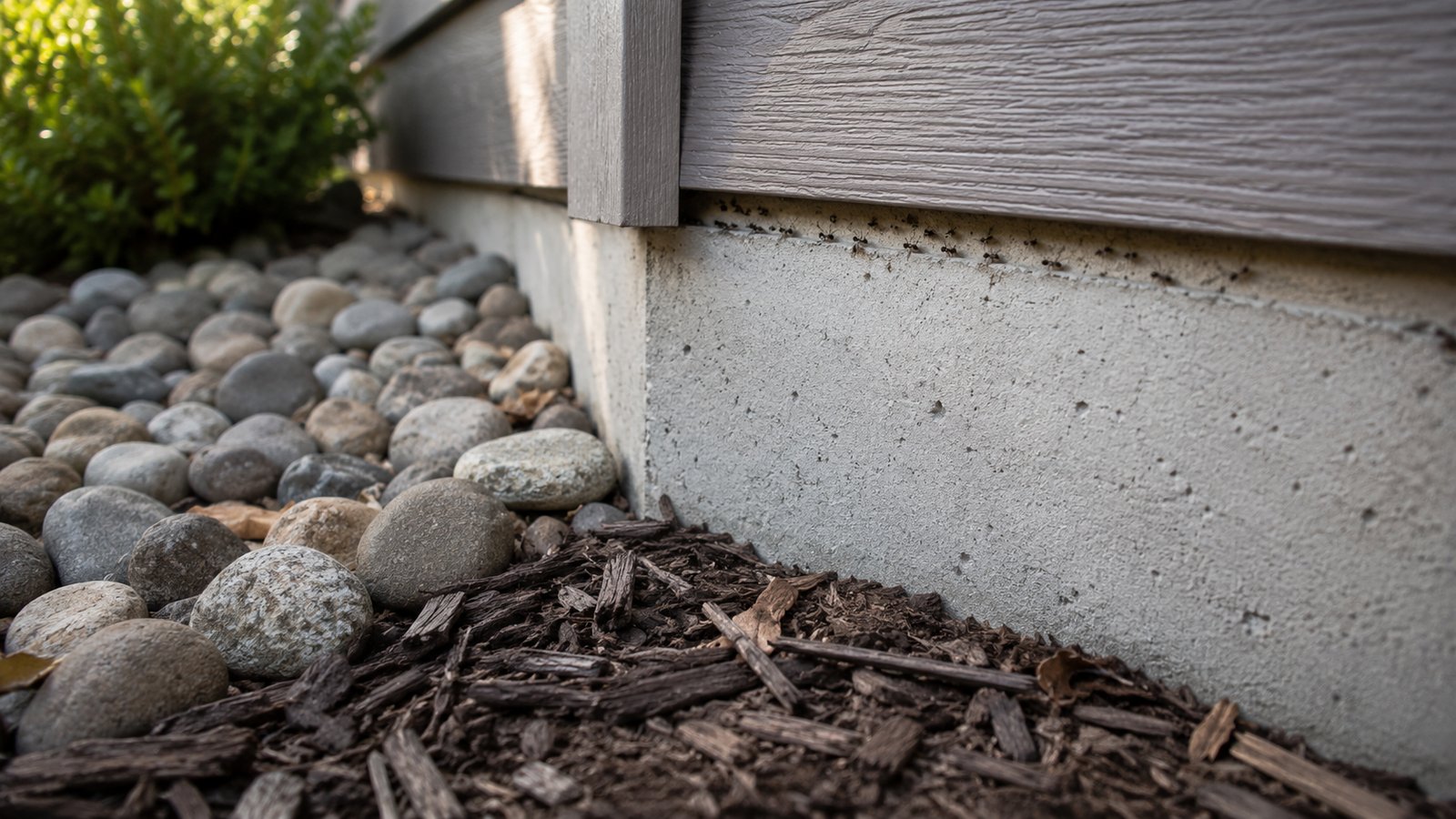
Treat the Cause
Every ant trail on a counter and every spider in a basement corner traces back to an opening — a foundation crack, a gap at a window or door, a utility line punched through the wall. Once inside, pests nest, contaminate food, and multiply in places you can't see.
This service works both ends of that problem: targeted treatments that eliminate the active infestation at its source, and detailed foundation and perimeter treatments that cut off the entry points so the next colony doesn't follow the same trail in.
What We Treat
A few ants on the counter usually means a colony nearby — and once they find food, pheromone trails bring hundreds more. We deal with the species North Idaho and Eastern Washington actually produce: odorous house ants, pavement ants, and carpenter ants. Carpenter ants deserve respect — they don't eat wood like termites, but they excavate it for nesting galleries, and that costs structure. Our treatments target the colony itself, not just the visible trail, then cut off the pathways back in.
Basements, garages, crawlspaces, quiet corners — and every fall, an influx of wandering hobo and giant house spiders as males roam in mating season. All are unwelcome. Black widows are the exception worth taking seriously, favoring undisturbed spots like sheds and woodpiles. We remove webs, apply barrier treatments, and reduce the insects spiders feed on, which thins them out at the source.
Roaches contaminate food and spread bacteria, and German cockroaches in particular reproduce fast in tight spaces — cabinets, appliances, wall voids. We use targeted baiting systems applied where roaches actually hide and breed, breaking the life cycle instead of scattering the population. Sanitation and moisture fixes lock in the result.
Field and camel crickets settle into basements, crawlspaces, garages, and storage areas — chirping all night and feeding on fabric and paper. We treat the damp, dark areas they breed in and address the moisture that attracted them.
Season by Season
Indoor pest pressure across Post Falls, Coeur d’Alene, and the Spokane area peaks when the weather turns: September and October bring the spider influx and boxelder bugs massing on warm south-facing walls, looking for a way in. And if you're seeing ant activity indoors in the dead of winter, that's not a stray scout — it usually means a nest inside the structure. Whatever the season, the prevention basics hold:
FAQs
Food sources, moisture, and small entry points around the foundation, windows, doors, and utility lines. Sealing gaps and keeping food in sealed containers reduces the pull — and our treatments handle the pests that get in anyway.
Most spiders here are unwelcome housemates rather than a danger — including the hobo and giant house spiders that wander indoors each fall. Black widows are the exception worth respecting; they favor undisturbed spots like garages, sheds, woodpiles, and crawlspaces, and professional treatment addresses the hazard.
Fast. Ant colonies recruit hundreds of workers to a food source once a trail is established, and German cockroaches multiply rapidly in tight hiding spots. The earlier the treatment, the smaller the problem stays — prompt professional treatment is recommended before it grows.
Related
The quarterly exterior program that keeps the perimeter barrier maintained year-round.
Learn moreExclusion inspections that find the physical gaps pests are using — and exactly how to close them.
Learn moreWhen the thing in the walls is bigger than an insect — trapping, removal, and a clear plan to close the entry points.
Learn moreFree, No-Pressure Quote
Tell us what you're seeing and where. We'll treat the infestation at its source and close off the way it got in.
Get My Free Quote