Lawn & Garden Pest Control
Mosquito and tick treatments for the same outdoor spaces you're clearing of wasps.
Learn more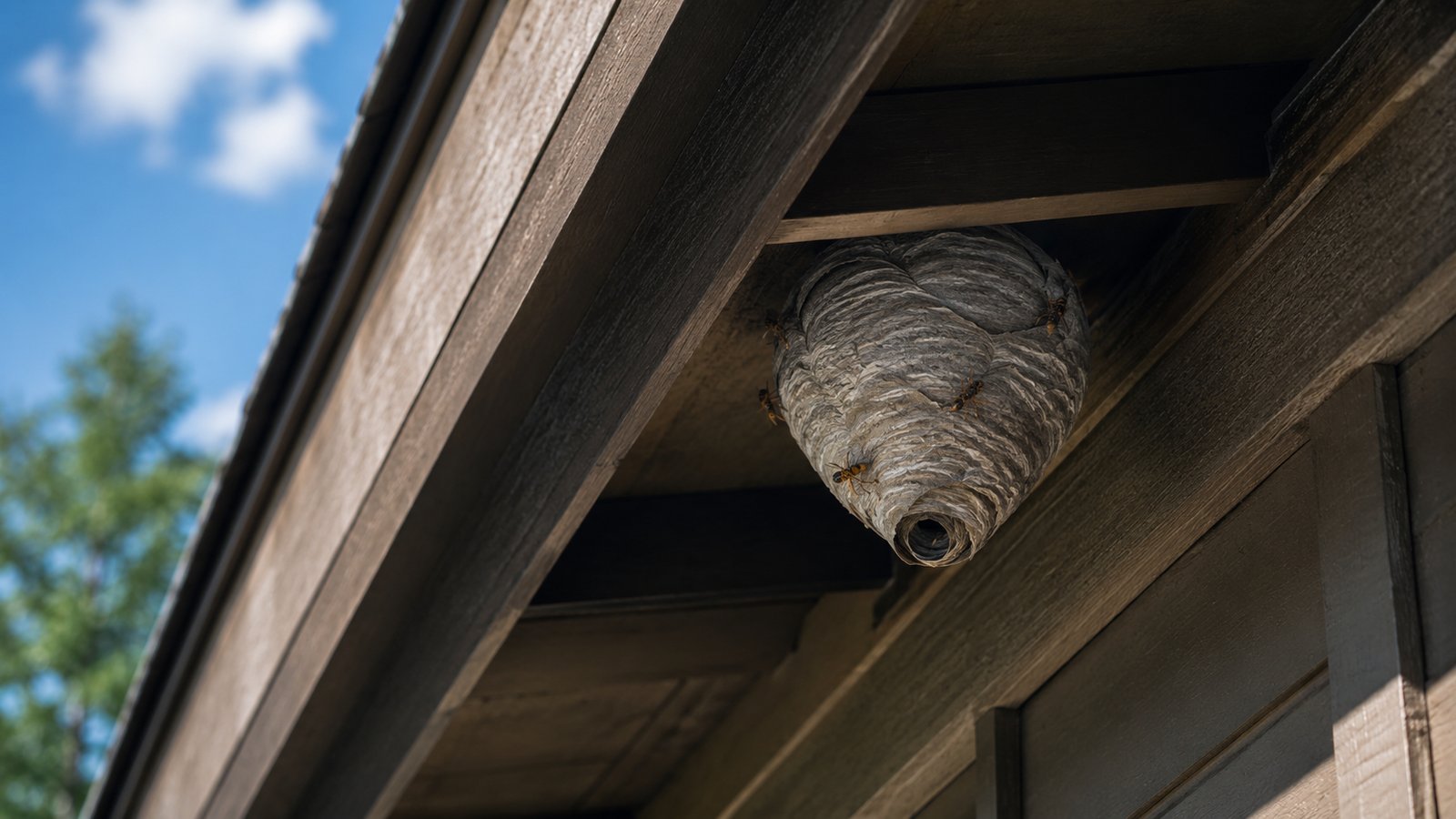
Safety First
Stinging insects build in protected spots — roof eaves, deck framing, siding gaps, wall voids, sheds, even underground — and colonies grow more aggressive as they grow larger. For anyone with a sting allergy, a disturbed nest is a genuine emergency. Our technicians locate the nest, identify the species, eliminate the colony with targeted treatments, and in many cases remove the physical nest once activity has been neutralized.
The Yellowjacket Calendar
In the Inland Northwest, every wasp season follows the same script. Overwintered queens come out with the first warm spells of spring and start golf-ball-sized nests under eaves. Through summer the colonies build steadily — and by August and September, paper wasps, yellowjackets, and bald-faced hornets hit their peak.
Fall is when yellowjackets get genuinely aggressive: colonies are at maximum size just as natural food sources shift, which is why they crash every barbecue in September. A yellowjacket nest underground or in a wall void can hold hundreds or even thousands of insects by then. The earlier in the season a nest is treated, the smaller and safer the job.
Beyond Wasps
Bees are pollinators, and we treat them that way: with honeybee swarms we prioritize safe management and may coordinate with local beekeepers when relocation is appropriate. Carpenter bees are a different story — they bore nesting tunnels into decks, fences, and siding, weakening the wood over time. We treat active nesting holes, deter new activity, and advise you on protecting exposed wood surfaces.
When flies keep showing up indoors, there's a source — and treatment without finding it is wasted effort. Cluster flies overwinter in walls and attics and emerge at your windows; drain flies breed in the organic buildup inside plumbing. We identify the species, treat the active population, and provide sanitation recommendations so the problem doesn't restart.
Prevention that helps between visits: sealed trash containers, less standing water, trimmed vegetation near the house, and sealed gaps in siding and rooflines.
FAQs
We recommend against it. Wasps, hornets, and especially yellowjackets become aggressive when a nest is disturbed and can sting repeatedly and in numbers. Our technicians have the protective equipment and treatment methods to eliminate nests safely — that's the whole point of calling a professional.
Late summer into fall. Colonies that a single queen started in spring reach peak size by August and September, and as natural food sources shift, yellowjackets turn their most aggressive. The earlier in the season a nest is treated, the easier and safer the job.
With honeybee swarms we prioritize safe management and may coordinate with local beekeepers when relocation is appropriate. Wood-boring carpenter bees are treated directly — we treat active nesting holes and help you protect exposed wood from new activity.
Related
Mosquito and tick treatments for the same outdoor spaces you're clearing of wasps.
Learn moreQuarterly inspections catch starter nests in spring — before the colony does its summer growing.
Learn moreThe quarterly foundation program covering ants, spiders, and mice around the whole structure.
Learn moreFree, No-Pressure Quote
Tell us where it is and we'll handle it safely — and check the rest of the property while we're at it.
Get My Free Quote